Media Service Matters
A PFAS treatment system does its most important work long after commissioning, and the granular activated carbon or ion exchange resin at its core has a finite working life. Steady media service keeps that system compliant as the media nears breakthrough, turning each exchange into a planned, routine event.
Planned early, the end of media life becomes a routine exchange rather than a scramble.

Sentinel Media Service Advantages
1. Availability
Crews ready when your system needs them
A schedule focused only on PFAS drinking water keeps crews available, so your exchange happens on your timeline, and your water stays in compliance.
2. Clean Separation
Equipment dedicated to drinking water
Because equipment stays within PFAS drinking water work, it never carries industrial contaminants onto your system, keeping cross-contamination risk low.
3. Trained Crews
Prepared for safe media handling
OSHA 40-hour HAZWOPER-trained technicians handle confined-space entry and media handling safely and correctly, protecting your site and your finished water.
4. Broad Coverage
Service for any system, anywhere
Sentinel services systems it builds and systems built by others with equal skill, reaching across a wide geography through vetted partners held to the same standard.
Considerations We Help You Navigate
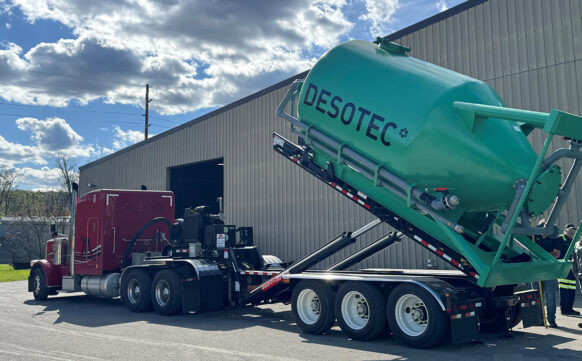
A few factors shape every media exchange. Here is how Sentinel turns each one into a planned part of your project.
Characterization lead time
Disposal characterization, commonly the TCLP test, can take two to four weeks to return. Starting the profile at least a month ahead keeps the exchange on schedule.
System size and site access
System size and how easily a truck reaches the site guide the exchange method. Sentinel weighs both up front and recommends the approach that fits.
Downtime and redundancy
Systems that cannot run on a single vessel during an exchange benefit from a spare vessel, which shrinks downtime to the time it takes to switch vessels.
Timing the exchange
Sample ports at 25, 50, and 75 percent of the bed, plus the effluent at 100 percent, let operators track breakthrough and predict the next change, so the exchange begins with room to spare.
Our Approach: Matched to Your System and Site
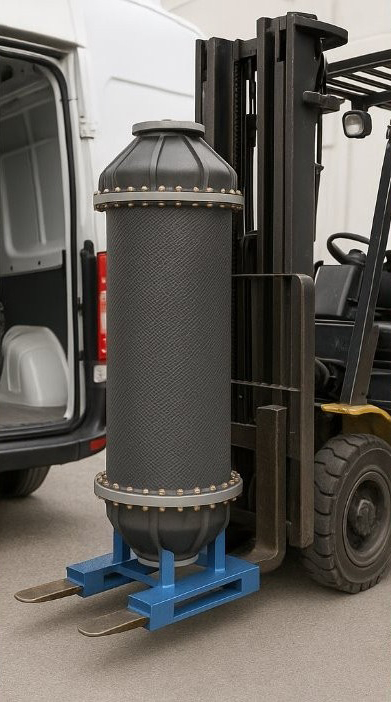 Rather than forcing every system into one method, Sentinel designs the exchange around your system size and site access, handling the work from characterization through conditioning. In practice, that means:
- Slurry exchange for larger systems
A compartmented tanker delivers fresh media and carries spent media away in one trip while the rest of the system keeps treating water. The crew slurries out the spent media, inspects the vessel and internals, and slurries fresh media in over a protective water cushion, returning the bed to service within a day or two.
- Vacuum exchange and blow case for compact sites
Where a tanker cannot reach or a system is smaller, a vacuum trailer clears the spent media and fresh media returns by super sack, by hand in smaller bags, or by pressurized blow case. The crew rinses the vessel walls and laterals before the fresh bed goes in.
- Full vessel swap for the smallest vessels
For vessels generally up to five thousand pounds, the whole vessel is conditioned at a service facility and returned ready to run, ideal for sites without on-site backwash water, a sewer connection, or source redundancy. With a spare vessel on hand, downtime shrinks to about half an hour.
How a Media Exchange Works
Step 1 - Characterize the spent media
The spent media is sampled and profiled, commonly by TCLP, to tell the receiving facility what it has captured. The disposal profile is filed and acceptance secured, a step best started at least a month ahead.
Step 2 - Schedule the service
With acceptance in hand, the work is scheduled and the method is set by system size and site access, so the crew arrives ready for your site.
Step 3 - Exchange the media
The vessel is isolated and bypassed while the rest of the system keeps treating water. The crew removes the spent media, inspects the vessel and internals, and loads fresh media over a protective water cushion.
Step 4 - Condition and return to service
Fresh media is conditioned for its type, GAC rested and backwashed, resin forward flushed, and the bed is returned to service, ready for its next full run.
System Optimization Along the Way
Every service visit is a chance to improve performance. Sentinel technicians spot conditions the original design could not anticipate and recommend enhancements that extend media life:
- A bag or cartridge filter ahead of the bed to keep solids out, often extending media life by six months to a year or more.
- Assist vessels for iron or manganese where the source water calls for it.
- A GAC stage ahead of resin, so the carbon takes on competing contaminants, and the resin concentrates on PFAS; because GAC costs less than resin, the sequence can lower long-term cost.
- Rapid pilot rentals to test a better pre-treatment or media approach on your actual water before you commit capital.